

10 Healthy Habits for a Better Life
Living a healthy life is not about making drastic changes overnight. Instead, it is about building small, consistent habits that improve your physical, mental, and emotional well-being. In today’s busy world, many people struggle to maintain a healthy routine due to work pressure, unhealthy eating habits, lack of sleep, and stress.
Fortunately, developing a healthier lifestyle doesn’t have to be difficult. By following a few simple practices every day, you can increase your energy, reduce the risk of chronic diseases, improve your mood, and enjoy a better quality of life.
Here are 10 healthy habits for a better life that anyone can adopt, regardless of age or lifestyle.
1. Eat a Balanced Diet
A healthy diet provides your body with the nutrients it needs to function properly. Instead of relying on processed foods, include a variety of fresh fruits, vegetables, whole grains, lean proteins, and healthy fats in your meals.
A balanced diet can help:
- Strengthen your immune system
- Improve digestion
- Maintain a healthy weight
- Reduce the risk of heart disease and diabetes
Try to avoid excessive sugar, salt, and unhealthy fats while choosing fresh and natural foods whenever possible.
2. Stay Hydrated
Water is essential for nearly every function in the human body. Drinking enough water helps regulate body temperature, improve digestion, transport nutrients, and keep your skin healthy.
Most adults should aim to drink around 2 to 3 liters of water daily, although individual needs may vary depending on activity level and climate.
Simple tips to stay hydrated:
- Carry a reusable water bottle
- Drink water before meals
- Replace sugary drinks with water or herbal tea
3. Exercise Regularly
Physical activity is one of the most important habits for maintaining good health. You don’t need to spend hours at the gym—simple activities like walking, cycling, yoga, or swimming can make a big difference.
Benefits of regular exercise include:
- Stronger muscles and bones
- Better heart health
- Improved mood
- Increased energy
- Better sleep quality
Aim for at least 150 minutes of moderate exercise each week.
4. Get Enough Sleep
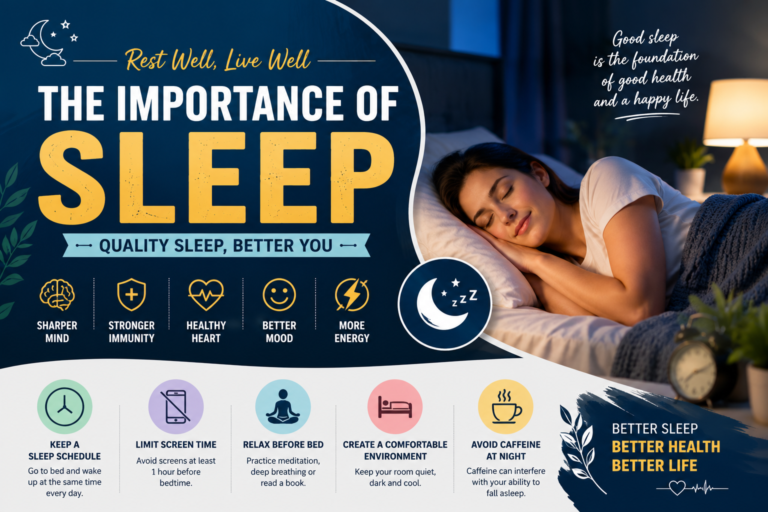
Quality sleep allows your body and mind to recover. Adults generally need 7–9 hours of sleep each night.
Poor sleep may lead to:
- Fatigue
- Reduced concentration
- Weakened immunity
- Weight gain
- Increased stress
To improve sleep quality:
- Maintain a regular bedtime
- Avoid screens before sleeping
- Keep your bedroom cool and quiet
- Limit caffeine in the evening
5. Manage Stress Effectively
Stress is a natural part of life, but chronic stress can negatively affect both physical and mental health.
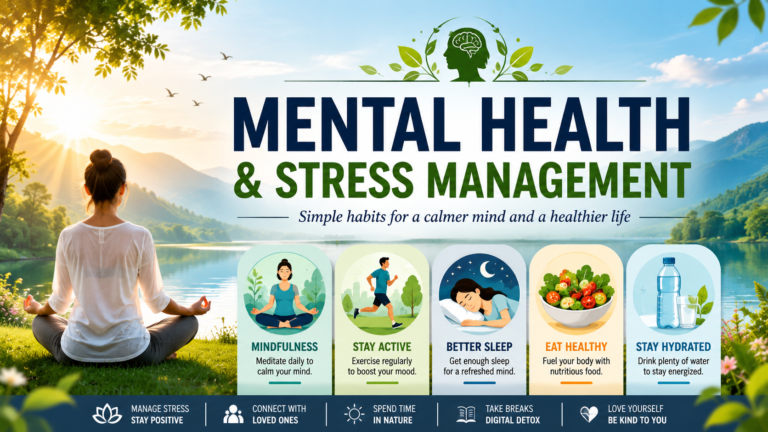
Healthy ways to manage stress include:
- Deep breathing exercises
- Meditation
- Spending time in nature
- Listening to music
- Talking with friends or family
- Practicing gratitude
Even 10–15 minutes of relaxation each day can improve your overall well-being.
6. Limit Processed Foods and Sugar
Processed foods often contain high amounts of sugar, sodium, and unhealthy fats.
Reducing processed food intake can help:
- Improve heart health
- Control blood sugar levels
- Reduce inflammation
- Support weight management
Choose homemade meals and fresh ingredients whenever possible.
7. Maintain Good Personal Hygiene
Good hygiene helps prevent infections and promotes overall health.
Healthy hygiene habits include:
- Washing hands regularly
- Brushing teeth twice a day
- Bathing daily
- Wearing clean clothes
- Keeping your living environment clean
Simple hygiene practices significantly reduce the spread of illnesses.
8. Keep Your Mind Active
Mental fitness is just as important as physical fitness.
Activities that stimulate the brain include:
- Reading books
- Solving puzzles
- Learning new skills
- Playing strategy games
- Taking online courses
Continuous learning keeps your brain sharp and improves memory.
9. Build Strong Relationships
Healthy relationships contribute to emotional well-being and happiness.
Spend quality time with:
- Family
- Friends
- Colleagues
- Community groups
Positive social connections help reduce stress, improve confidence, and provide emotional support during difficult times.
10. Schedule Regular Health Checkups
Preventive healthcare allows doctors to detect health problems early.
Regular checkups may include:
- Blood pressure monitoring
- Blood sugar testing
- Cholesterol screening
- Dental examinations
- Eye examinations
Early detection often leads to more effective treatment and better long-term health outcomes.
Additional Tips for a Healthy Lifestyle
Besides these ten habits, consider:
- Avoid smoking
- Limit alcohol consumption
- Spend time outdoors
- Maintain good posture
- Practice gratitude daily
- Set realistic health goals
- Take regular breaks from work
These small changes can create lasting improvements over time.
Conclusion
Developing 10 healthy habits for a better life is one of the best investments you can make in your future. Healthy eating, regular exercise, quality sleep, hydration, stress management, and meaningful relationships all contribute to a happier and more productive life.
Remember that lasting change happens gradually. Focus on adopting one healthy habit at a time, and over the months, these small improvements will become part of your daily routine. A healthier lifestyle not only increases your lifespan but also improves the quality of every day you live.
Frequently Asked Questions
What is the most important healthy habit?
Eating a balanced diet, exercising regularly, staying hydrated, and getting enough sleep are among the most important healthy habits.
How long does it take to build a healthy habit?
Research suggests it can take anywhere from 21 to 66 days to develop a consistent habit, depending on the individual and the behavior.
How much exercise should adults get?
Adults should aim for at least 150 minutes of moderate-intensity exercise each week, along with muscle-strengthening activities on two or more days.
Why is drinking water important?
Water supports digestion, circulation, body temperature regulation, nutrient transport, and overall health.
Can small lifestyle changes really make a difference?
Yes. Small, consistent improvements over time can significantly enhance physical health, mental well-being, and overall quality of life.