
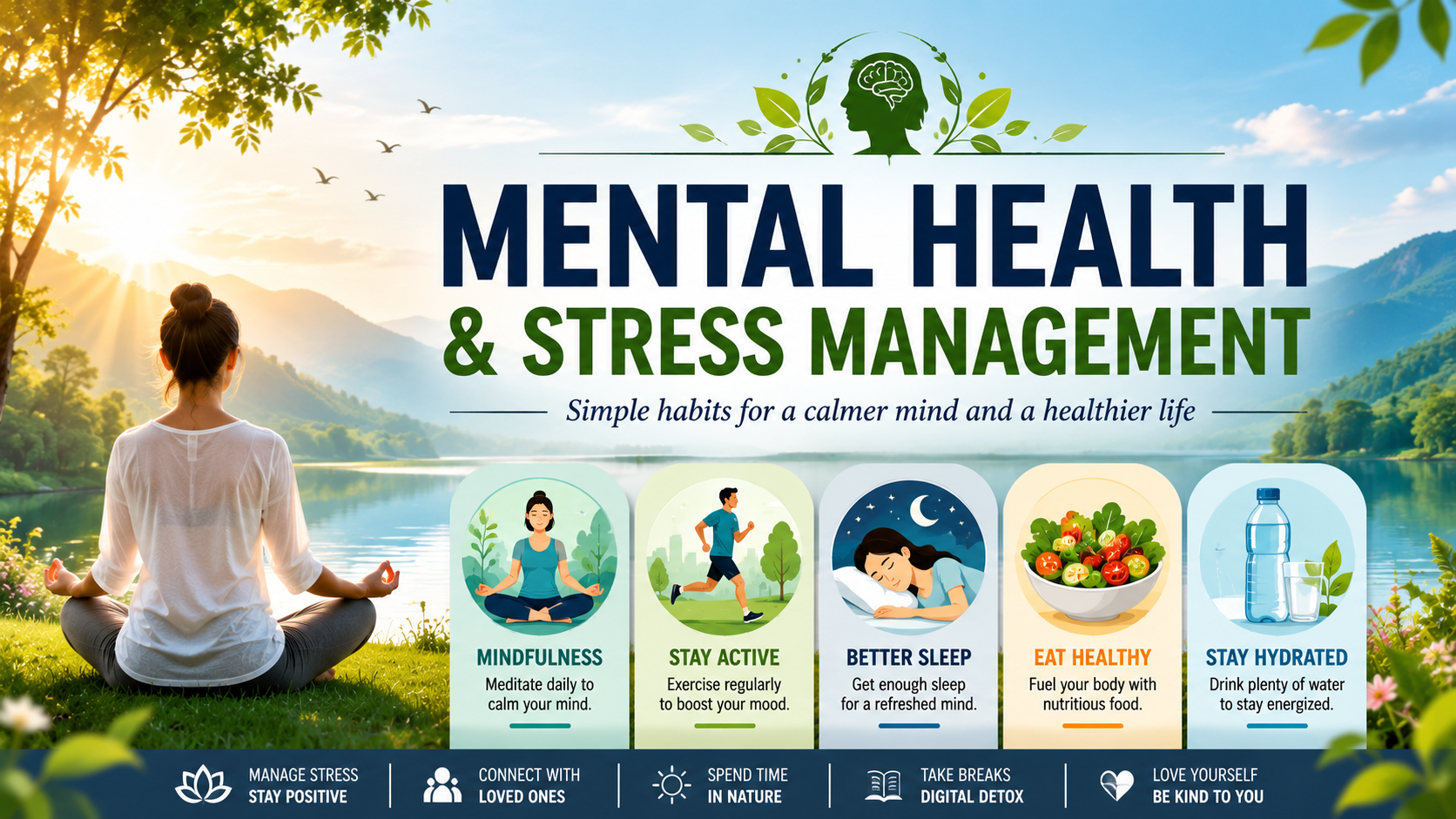
Mental health is an essential part of overall well-being. In today’s fast-paced world, people often face stress from work, studies, finances, and personal responsibilities. While occasional stress is normal, long-term stress can affect both physical and emotional health.
Understanding Mental Health and Stress Management can help individuals improve their quality of life, maintain healthy relationships, and increase productivity. By adopting healthy habits and learning effective coping strategies, it is possible to reduce stress and improve emotional well-being.
Why Mental Health Matters
Mental health affects how people think, feel, and behave in everyday life. Good mental health helps individuals handle challenges, make informed decisions, and maintain healthy relationships.
Benefits of good mental health include:
- Better emotional balance
- Improved focus and concentration
- Stronger relationships
- Increased productivity
- Better physical health
According to the World Health Organization (WHO), mental health is a fundamental component of overall health and well-being.
Common Causes of Stress
Stress can come from different areas of life. Identifying the causes of stress is the first step toward managing it effectively.
Common sources of stress include:
- Work pressure
- Financial concerns
- Family responsibilities
- Academic challenges
- Social media overload
- Health-related issues
Understanding your stress triggers can help you develop healthier coping strategies.
Practice Regular Exercise
Physical activity is one of the most effective ways to improve mental health and reduce stress.
Benefits of exercise:
- Improves mood
- Reduces anxiety
- Boosts energy levels
- Improves sleep quality
- Increases self-confidence
Activities such as walking, yoga, cycling, and swimming can positively affect mental well-being.
The Centers for Disease Control and Prevention (CDC) recommends regular physical activity to maintain overall health.
Get Enough Sleep
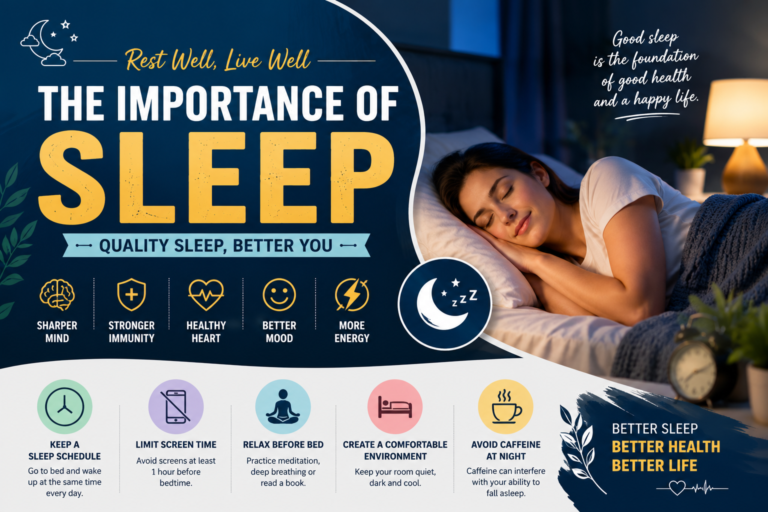
Sleep plays an important role in emotional and physical health. Poor sleep can increase stress and negatively affect concentration and mood.
Tips for better sleep:
- Maintain a regular sleep schedule
- Avoid screens before bedtime
- Create a relaxing sleep environment
- Limit caffeine intake at night
Quality sleep helps the brain recover and improves emotional resilience.
Practice Mindfulness and Meditation
Mindfulness techniques can help calm the mind and reduce stress levels.
Simple stress-management techniques:
- Deep breathing exercises
- Meditation
- Yoga
- Journaling
- Spending time in nature
Regular mindfulness practices can improve emotional balance and reduce anxiety.
Eat a Healthy Diet
A balanced diet supports both physical and mental health.
Foods that support mental wellness:
- Fruits and vegetables
- Whole grains
- Fish and lean proteins
- Nuts and seeds
- Dairy products
Healthy eating habits can improve mood and energy levels.
Stay Connected With Others
Strong social relationships play an important role in mental well-being.
Ways to maintain social connections:
- Spend time with family
- Talk to friends regularly
- Join community groups
- Participate in hobbies and activities
Social support can help individuals cope with difficult situations and reduce feelings of isolation.
Limit Screen Time and Social Media
Excessive use of social media can contribute to stress and anxiety.
Healthy digital habits:
- Set daily screen-time limits
- Take regular breaks
- Turn off unnecessary notifications
- Spend more time offline
Balancing online and offline activities can improve mental health.
When to Seek Professional Help
Sometimes stress and emotional challenges require professional support.
You should consider seeking help if you experience:
- Persistent sadness
- Severe anxiety
- Difficulty concentrating
- Changes in sleep patterns
- Loss of interest in daily activities
The National Institute of Mental Health (NIMH) provides resources related to mental health and emotional well-being.
Conclusion
Improving Mental Health and Stress Management requires consistent effort and healthy habits. Regular exercise, quality sleep, balanced nutrition, mindfulness, and strong social connections can help reduce stress and improve emotional well-being.
Taking small steps every day can make a significant difference in your overall health and happiness. If stress becomes overwhelming, seeking professional help is an important step toward recovery and long-term wellness.
Frequently Asked Questions
What is stress management?
Stress management involves techniques and habits that help individuals cope with stress and maintain emotional well-being.
How can exercise improve mental health?
Exercise releases chemicals in the brain that improve mood, reduce anxiety, and increase energy levels.
When should someone seek professional help?
Professional help may be needed when stress, anxiety, or emotional difficulties begin to interfere with daily life.