

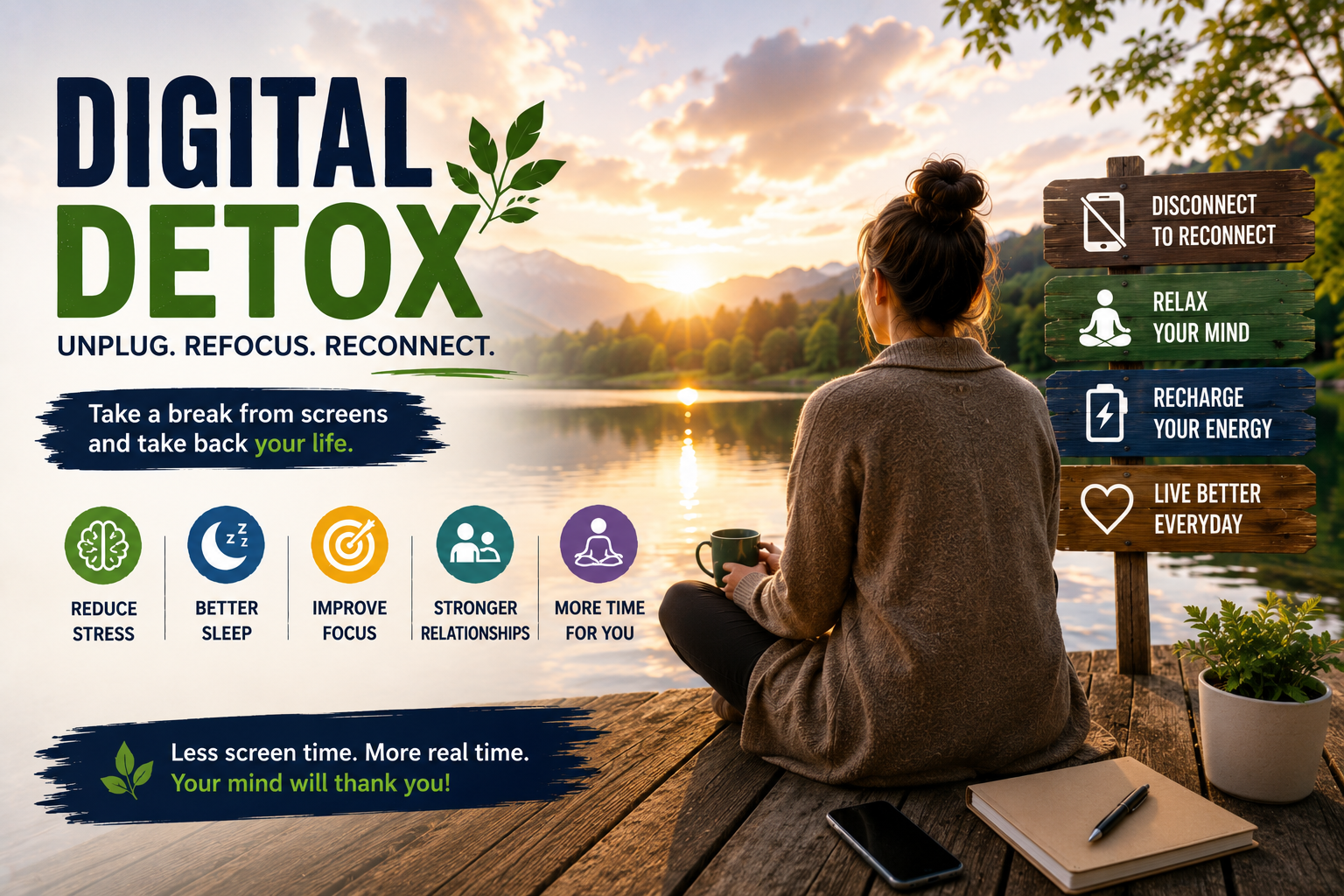
Technology has transformed the way people communicate, work, and entertain themselves. Smartphones, social media platforms, and digital devices have become essential parts of everyday life. However, excessive screen time can negatively affect mental health, sleep quality, productivity, and relationships.
A Digital Detox is the process of reducing the use of digital devices to create a healthier balance between online and offline life. Taking regular breaks from technology can improve concentration, reduce stress, and increase overall well-being.
What Is a Digital Detox?
A digital detox means intentionally limiting the use of smartphones, social media, computers, and other digital devices for a specific period.
Common forms of digital detox
- Turning off social media notifications
- Avoiding screens before bedtime
- Taking breaks from social media
- Spending more time outdoors
- Limiting smartphone use during meals
The goal is not to eliminate technology completely but to use it more consciously.
Signs That You Need a Digital Detox
Many people don’t realize how much time they spend online.
Common warning signs
- Constantly checking your phone
- Difficulty concentrating
- Feeling stressed without internet access
- Sleep problems
- Reduced productivity
- Spending less time with family and friends
Recognizing these signs can help you make healthier lifestyle choices.
How Excessive Screen Time Affects Mental Health
Spending too much time online can affect emotional well-being.
Negative effects of excessive screen time
- Increased anxiety
- Higher stress levels
- Sleep disturbances
- Reduced attention span
- Social isolation
According to the World Health Organization (WHO), mental well-being is essential for overall health.
Benefits of a Digital Detox
Reducing screen time can improve different areas of life.
Key benefits
- Better concentration
- Improved sleep quality
- Increased productivity
- Stronger relationships
- Lower stress levels
- Better emotional balance
Many people notice significant improvements in their mood after reducing digital distractions.
Practical Ways to Reduce Screen Time
You don’t need to stop using technology completely. Small changes can make a big difference.
Effective strategies
- Set daily screen-time limits
- Turn off unnecessary notifications
- Avoid phones before bedtime
- Schedule social media breaks
- Spend time outdoors
- Read books instead of scrolling
Build Healthy Technology Habits
Creating healthy digital habits can improve long-term well-being.
Healthy digital habits
- Keep phones away during meals
- Create technology-free zones
- Spend more time with family
- Use apps that track screen time
- Prioritize offline hobbies
Balance is the key to healthy technology use.
Finding Balance Between Online and Offline Life
Technology offers many benefits, but maintaining balance is essential.
Activities that support a healthier lifestyle include:
- Exercise
- Meditation
- Traveling
- Reading
- Spending time in nature
The American Psychological Association (APA) offers resources related to stress management and mental wellness.
Conclusion
A Digital Detox is not about avoiding technology forever; it is about creating healthier habits and using digital devices more mindfully. Reducing screen time can improve mental health, increase productivity, and strengthen personal relationships.
By making small changes today, you can create a healthier and happier lifestyle.
Frequently Asked Questions
What is a digital detox?
A digital detox is a period during which a person reduces the use of digital devices to improve mental and physical well-being.
How long should a digital detox last?
A digital detox can last from a few hours to several days, depending on personal goals.
Can reducing screen time improve sleep?
Yes, limiting screen use before bedtime can improve sleep quality.