
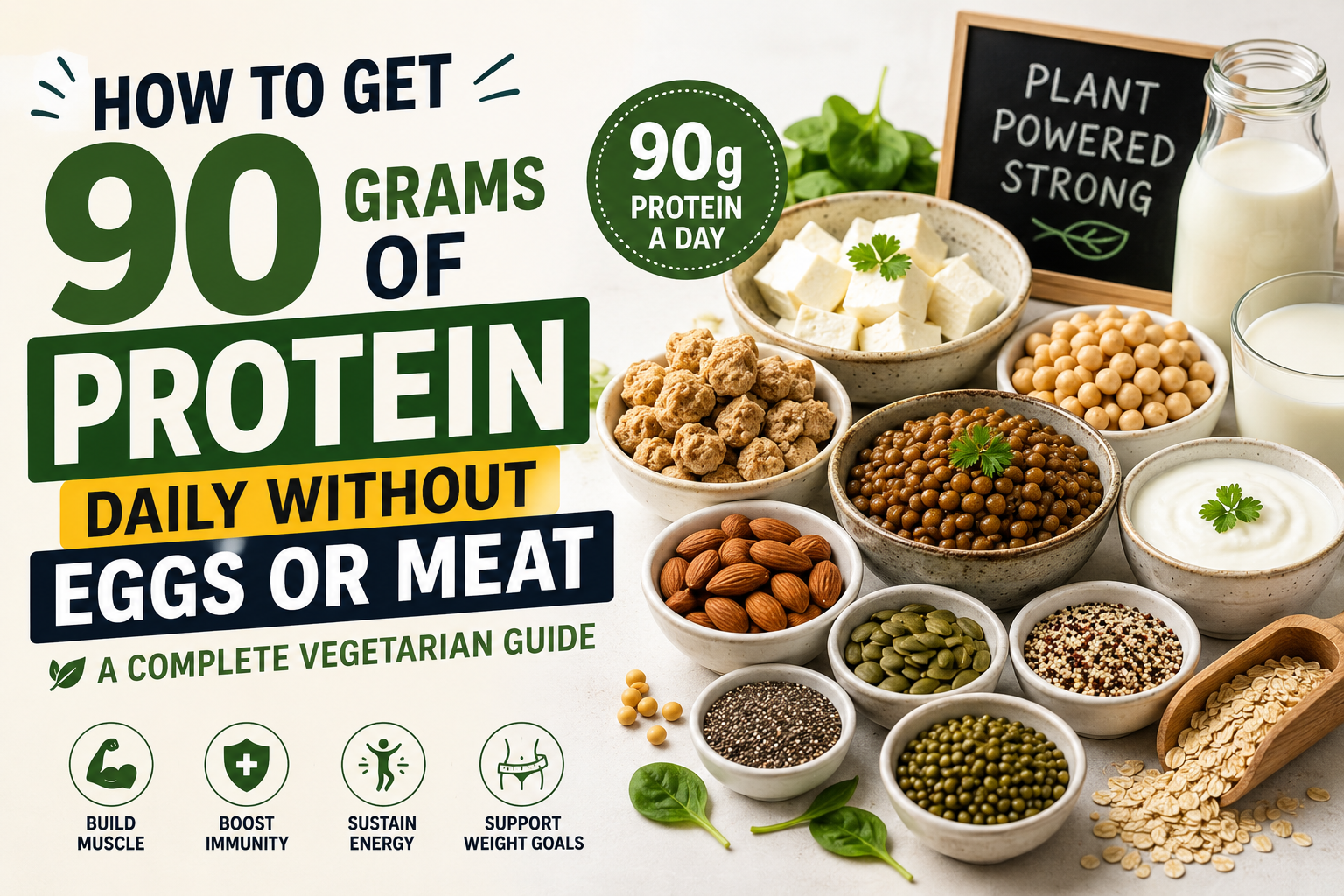
Many people believe that meeting high protein requirements is only possible with eggs, chicken, or other meat products. However, a well-balanced vegetarian diet can easily provide enough protein to support muscle growth, weight management, and overall health.
If your goal is to consume around 90 grams protein per day, the key is choosing a variety of protein-rich foods and spreading your intake throughout the day. Combining dairy products, legumes, soy-based foods, whole grains, nuts, and seeds can help you comfortably reach your daily target without relying on animal meat or eggs.
Why Protein Is Important
Protein is one of the body’s essential nutrients. It plays a vital role in:
- Building and repairing muscles
- Supporting healthy bones
- Strengthening the immune system
- Producing enzymes and hormones
- Keeping you full for longer
- Maintaining healthy skin and hair
Whether you’re trying to gain muscle, lose weight, or simply maintain good health, consuming adequate protein every day is important.
Can You Get 90 Grams of Protein on a Vegetarian Diet?
Yes. A vegetarian diet can easily provide 90 grams of protein if meals are properly planned.
Instead of consuming most of your protein in one meal, distribute it across breakfast, lunch, dinner, and healthy snacks. This approach supports better digestion, helps maintain steady energy levels, promotes muscle recovery, and keeps you feeling satisfied throughout the day.
Best Vegetarian Protein Sources
1. Soy Products
Soy is considered one of the highest-quality plant-based protein sources because it contains all nine essential amino acids.
Good options include:
- Soy chunks
- Tofu
- Soy milk
- Edamame
A single serving of soy chunks can provide approximately 20–25 grams of protein.
2. Dairy Products
For vegetarians who consume dairy, these foods are excellent protein sources:
- Milk
- Paneer
- Greek yogurt
- Curd
- Buttermilk
Greek yogurt and paneer are especially rich in protein while also providing calcium for stronger bones.
3. Lentils and Pulses
Indian kitchens already have many excellent protein-rich foods, including:
- Moong dal
- Masoor dal
- Toor dal
- Rajma
- Chole
- Black gram
One cup of cooked dal generally provides around 8–10 grams of protein while also supplying fiber and essential minerals.
4. Whole Grains
Whole grains complement legumes and improve the overall quality of plant protein.
Healthy choices include:
- Whole wheat roti
- Brown rice
- Millets
- Oats
- Quinoa
Pairing grains with dals creates a more balanced amino acid profile.
5. Nuts and Seeds
Although higher in healthy fats, nuts and seeds also contribute meaningful amounts of protein.
Good options include:
- Almonds
- Peanuts
- Pumpkin seeds
- Sunflower seeds
- Chia seeds
- Flaxseeds
Roasted chana is another affordable and protein-rich snack.
Sample Meal Plan to Reach 90 Grams of Protein
Here’s an example of how a vegetarian can achieve approximately 90 grams of protein in one day.
Breakfast
- Two glasses of milk
- Whole-grain toast with peanut butter
- Greek yogurt
Protein: 30–35 grams
Mid-Morning Snack
- Roasted chana
- Mixed nuts
Protein: 6–8 grams
Lunch
- One bowl of dal
- Two whole wheat rotis
- Mixed vegetable salad
Protein: 18–20 grams
Evening Snack
- Buttermilk
- Roasted soy nuts
Protein: 8–10 grams
Dinner
- Tofu or paneer
- Stir-fried vegetables
- Millet roti or chapati
Protein: 25–28 grams
Total protein intake can comfortably reach around 90 grams depending on portion sizes.
Benefits of Spreading Protein Throughout the Day
Eating protein at regular intervals offers several health benefits:
- Supports continuous muscle repair
- Improves satiety and reduces unnecessary snacking
- Helps maintain stable blood sugar levels
- Enhances workout recovery
- Promotes healthy metabolism
Instead of focusing on one large protein-heavy meal, include protein in every meal and snack.
Does Everyone Need 90 Grams of Protein?
Not necessarily.
Daily protein requirements vary depending on factors such as:
- Age
- Body weight
- Physical activity
- Fitness goals
- Medical conditions
- Pregnancy or breastfeeding
People involved in strength training or endurance sports generally require more protein than those with a sedentary lifestyle.
Rather than following trends seen on social media, it’s better to calculate your personal protein requirement or consult a registered dietitian.
Read More :- How to get 90 grams protein daily without eggs or meat
Things to Keep in Mind
When increasing protein intake:
- Drink enough water throughout the day.
- Include fiber-rich foods for better digestion.
- Choose minimally processed protein sources whenever possible.
- Balance protein with healthy carbohydrates and fats.
- Consult a healthcare professional if you have kidney or liver disease before making major dietary changes.
Final Thoughts
Getting 90 grams of protein daily without eggs or meat is entirely achievable with thoughtful meal planning. By including dairy products, soy foods, lentils, legumes, whole grains, nuts, and seeds in your daily diet, you can easily meet your protein goals while enjoying a variety of nutritious foods.
The key is consistency rather than chasing a specific number. Aim to include a quality protein source in every meal, maintain a balanced diet, and adjust your intake according to your age, activity level, and overall health. A well-planned vegetarian diet can provide all the protein your body needs while supporting long-term wellness.