
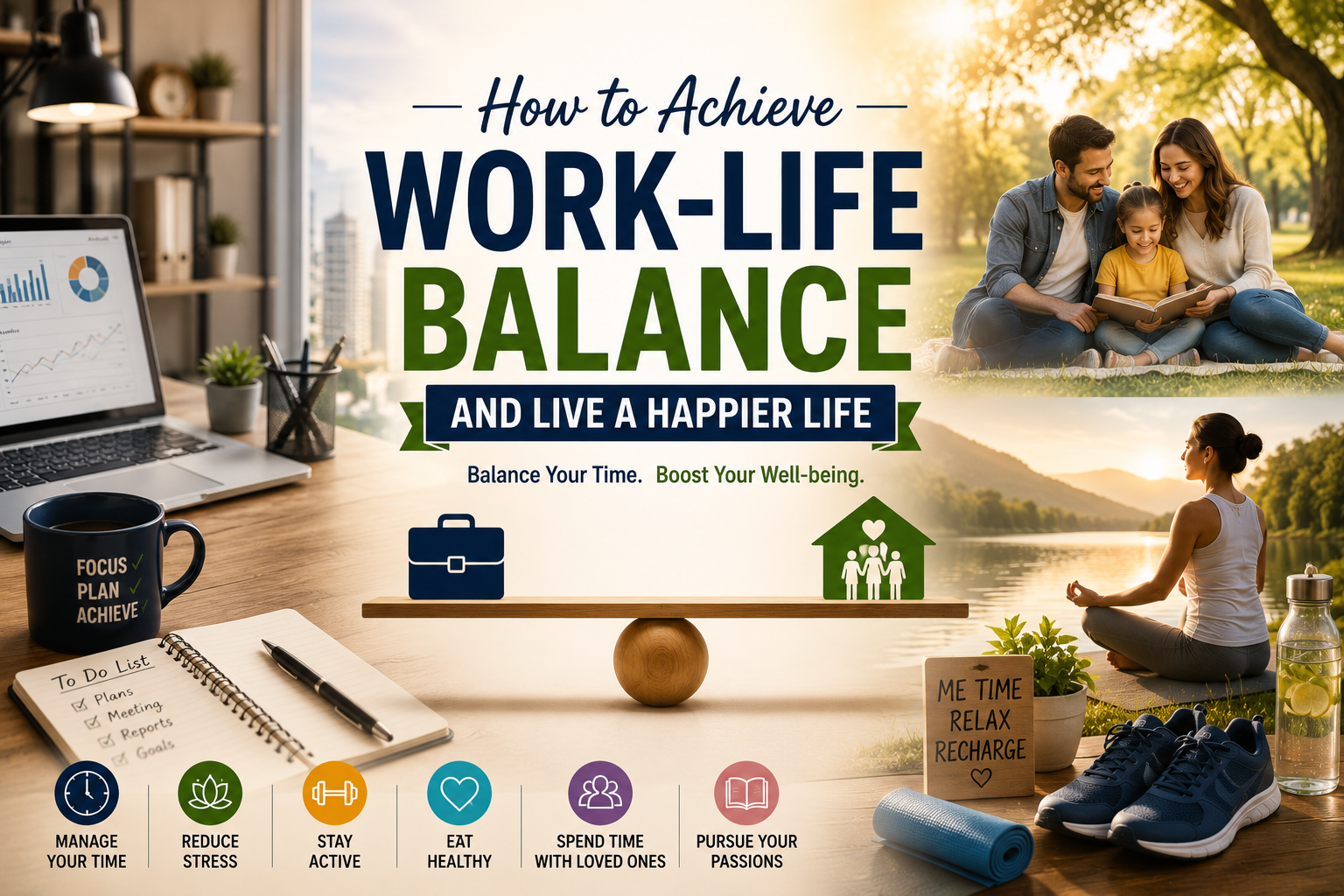
In today’s fast-paced world, maintaining a healthy work-life balance has become increasingly important. Many people struggle to manage their careers, personal responsibilities, relationships, and self-care, often leading to stress and burnout.
Achieving balance doesn’t mean dividing your time equally between work and personal life. Instead, it means creating a lifestyle that allows you to succeed professionally while also prioritizing your physical health, mental well-being, and personal happiness.
By adopting healthy habits and setting clear boundaries, you can improve your quality of life and enjoy greater satisfaction both at work and at home.
Understanding Work-Life Balance
Work-life balance refers to the ability to manage professional responsibilities and personal activities in a way that supports overall well-being.
A balanced lifestyle can help you:
- Reduce stress levels
- Improve mental health
- Increase productivity
- Strengthen relationships
- Enhance physical wellness
- Create more personal time
According to the World Health Organization (WHO), maintaining mental and physical health is essential for overall well-being.
Set Clear Boundaries Between Work and Personal Life
One of the biggest challenges in modern life is separating work from personal time.
Effective ways to create boundaries:
- Set fixed working hours
- Avoid checking emails after work
- Take regular breaks
- Create a dedicated workspace
- Prioritize family and personal activities
Setting boundaries helps reduce stress and improves focus.
Create a Healthy Daily Routine
A structured daily routine can increase productivity and improve mental clarity.
Habits for a balanced lifestyle:
- Wake up early
- Exercise regularly
- Eat nutritious meals
- Plan your day
- Take short breaks
- Get enough sleep
Small daily habits can make a significant difference over time.
Prioritize Physical and Mental Health
Your health should always be a top priority.
Ways to support your well-being:
- Practice meditation
- Exercise regularly
- Spend time outdoors
- Stay hydrated
- Limit screen time
- Connect with friends and family
The National Institute of Mental Health (NIMH) offers valuable resources on emotional well-being and stress management.
Learn to Manage Stress
Stress is a normal part of life, but managing it effectively is essential for maintaining balance.
Stress-management techniques:
- Deep breathing exercises
- Yoga and mindfulness
- Journaling
- Listening to music
- Pursuing hobbies
Reducing stress can improve your mood, focus, and overall health.
Make Time for Personal Growth
Personal growth plays an important role in achieving happiness and satisfaction.
Consider activities such as:
- Reading books
- Learning new skills
- Traveling
- Volunteering
- Setting personal goals
Continuous learning helps you grow both personally and professionally.
Limit Digital Distractions
Excessive use of social media and digital devices can affect productivity and mental health.
Tips to reduce distractions:
- Set screen-time limits
- Turn off unnecessary notifications
- Schedule social media breaks
- Spend more time offline
Creating healthy digital habits can improve concentration and reduce stress.
Build Strong Relationships
Healthy relationships contribute to emotional well-being and overall happiness.
Ways to strengthen relationships:
- Spend quality time with loved ones
- Communicate openly
- Show appreciation
- Support one another
Positive relationships provide emotional support during difficult times.
Conclusion
Achieving work-life balance is an ongoing process that requires conscious effort and healthy habits. By setting boundaries, managing stress, prioritizing health, and making time for personal growth, you can create a more balanced and fulfilling life.
Remember that balance looks different for everyone. Focus on building a lifestyle that supports your goals, values, and well-being.
Frequently Asked Questions
What is work-life balance?
Work-life balance is the ability to manage professional responsibilities and personal life in a healthy and sustainable way.
Why is work-life balance important?
A healthy balance reduces stress, improves mental health, increases productivity, and enhances overall quality of life.
How can I improve my work-life balance?
You can improve work-life balance by setting boundaries, creating a daily routine, prioritizing health, and managing stress effectively.