

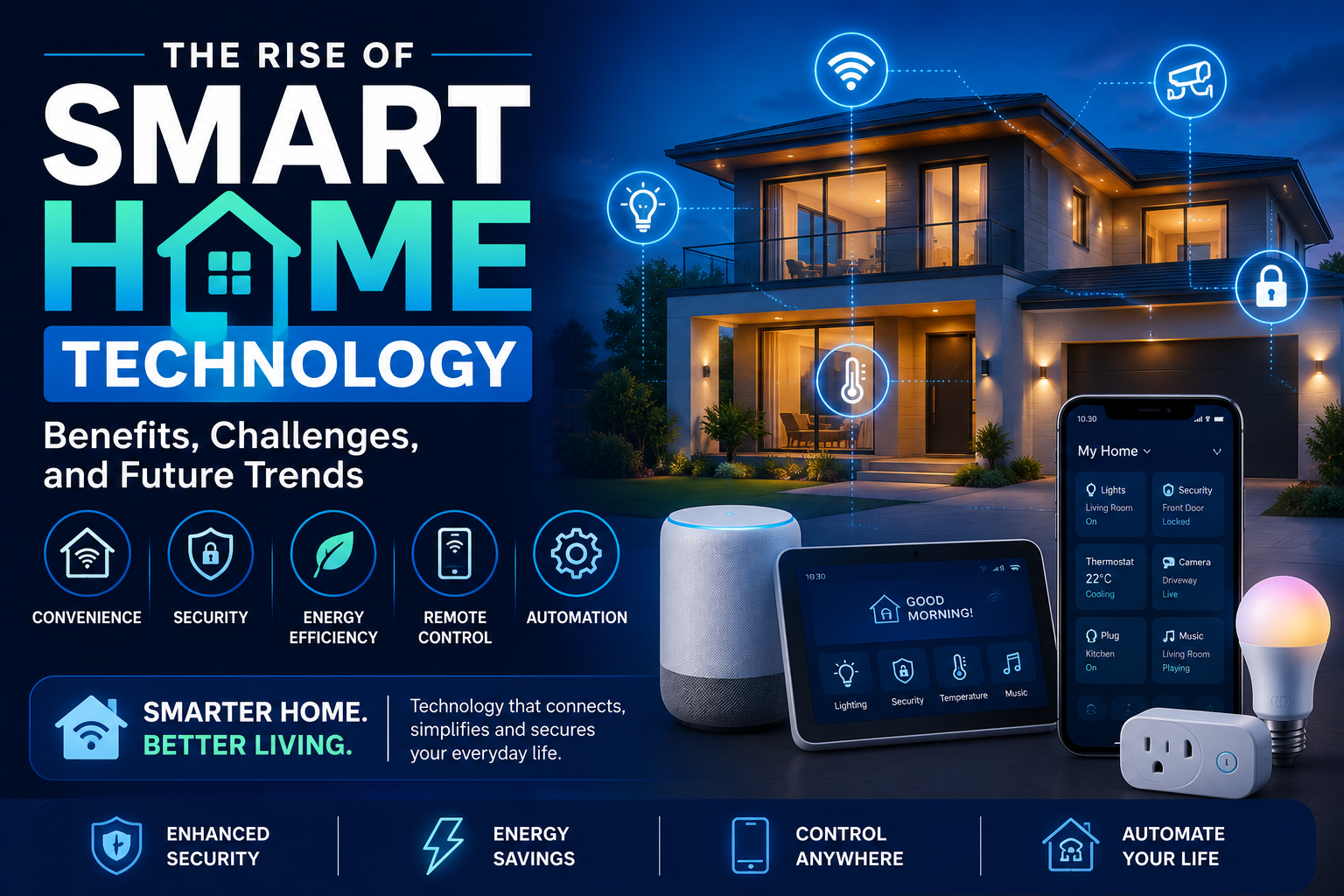
Smart Home Technology is changing the way people interact with their homes. Connected devices powered by the Internet of Things (IoT), artificial intelligence, and cloud computing allow homeowners to control lighting, security systems, appliances, and entertainment using smartphones or voice commands.
From improving convenience to enhancing energy efficiency and home security, smart home technology has become an important part of modern living. As technology continues to evolve, more households are adopting smart devices to create safer, more comfortable, and more connected homes.
What Is Smart Home Technology?
Smart home technology refers to internet-connected devices that communicate with each other and can be controlled remotely.
Common examples include:
- Smart speakers
- Smart lighting
- Smart thermostats
- Smart door locks
- Smart security cameras
- Smart TVs
- Robot vacuum cleaners
According to Google Home, smart home devices help users automate daily routines and manage their homes more efficiently.
Key Benefits of Smart Home Technology
Convenience
Users can control multiple devices through a single mobile application or voice assistant.
Examples include:
- Turning lights on remotely
- Locking doors from anywhere
- Scheduling appliances
- Managing entertainment systems
Improved Home Security
Smart security systems provide real-time alerts and remote monitoring.
Popular features include:
- Motion detection
- Video doorbells
- Security cameras
- Smart locks
Many homeowners use Ring security devices to improve home protection.
Energy Efficiency
Smart thermostats and lighting systems automatically optimize energy consumption.
Benefits include:
- Lower electricity bills
- Reduced energy waste
- Automatic scheduling
- Environmental sustainability
The ENERGY STAR program provides guidance on energy-efficient smart home products.
Popular Smart Home Devices
Some of the most widely used smart home products include:
- Smart speakers
- Video doorbells
- Security cameras
- Smart plugs
- Smart lighting
- Smart thermostats
- Smart sensors
Many of these devices can be integrated into a single ecosystem for better automation.
Challenges of Smart Homes
Despite the advantages, smart home technology also presents several challenges.
Privacy
Users should understand how their data is collected and stored.
Cybersecurity Risks
Internet-connected devices require strong passwords and regular software updates.
Compatibility
Not all smart devices work seamlessly with every platform.
Business such as Cloudflare Learning Center provide educational resources on internet security and online safety.
The Future of Smart Home Technology
Future innovations may include:
- AI-powered home assistants
- Predictive automation
- Smart energy management
- Health monitoring systems
- Advanced home robotics
As Artificial Intelligence continues to advance, smart homes are expected to become more personalized, secure, and efficient.
Microsoft continues to invest in AI technologies that support intelligent devices and automation.
Conclusion
Smart Home Technology is reshaping modern lifestyles by improving convenience, security, and energy efficiency. While challenges such as privacy and cybersecurity remain important, continuous innovation is making smart homes more practical and accessible.
As more connected devices become available, homeowners can expect even greater levels of automation and personalization. Understanding these technologies today will help consumers make informed decisions about the future of connected living.
Frequently Asked Questions
What is smart home technology?
Smart home technology includes internet-connected devices that automate and remotely control various household functions such as lighting, security, and appliances.
Are smart homes secure?
Smart homes can be secure when users follow best practices, including using strong passwords, enabling two-factor authentication, and regularly updating device software.
What are the main benefits of smart home technology?
The main benefits include convenience, enhanced security, improved energy efficiency, remote access, and greater automation.


