

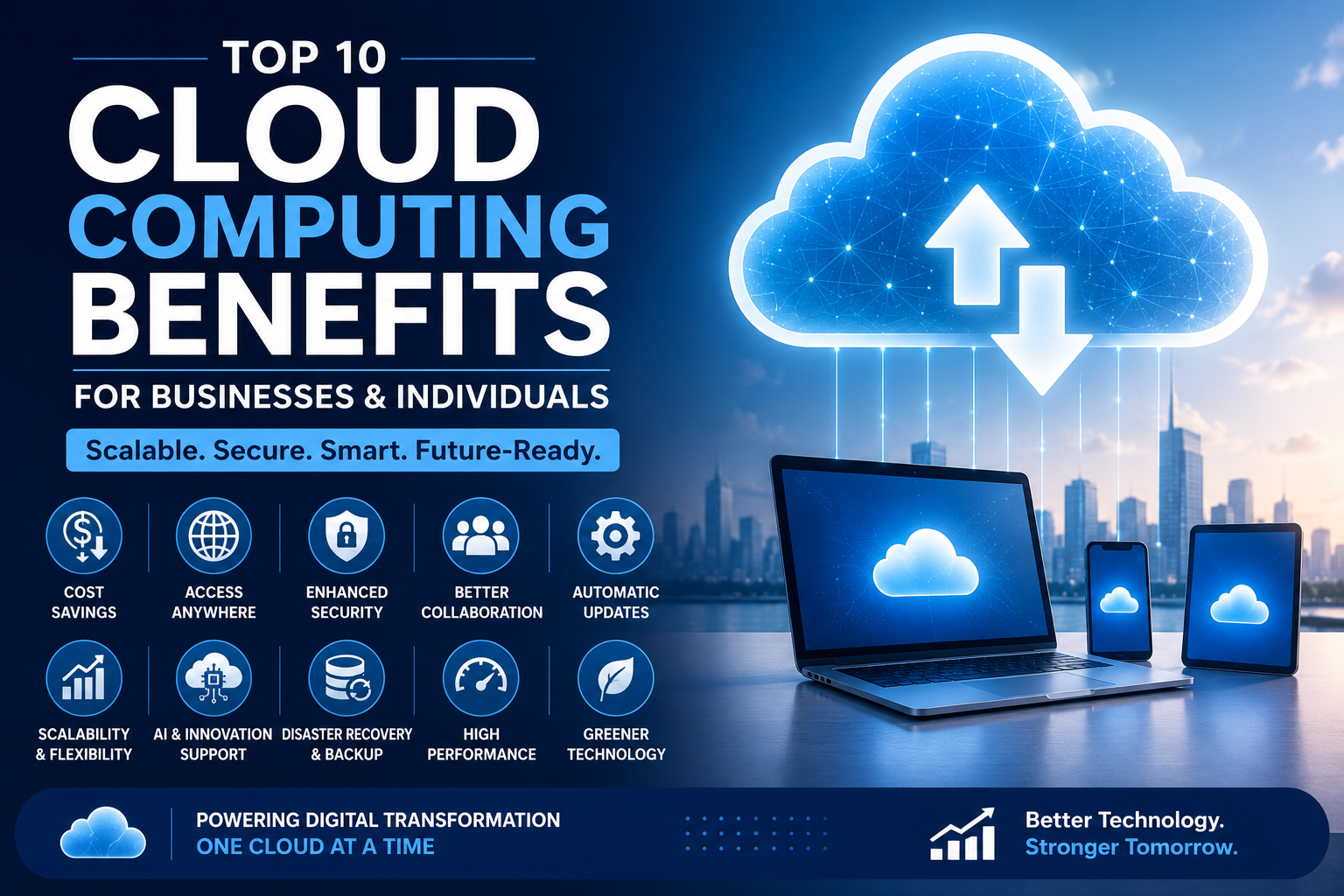
Cloud computing has transformed the way individuals and businesses store data, run applications, and collaborate online. Instead of relying on expensive physical servers, organizations now use cloud-based platforms to access computing resources whenever they need them. This flexibility has made cloud technology one of the most important innovations of the digital era.
Understanding the Cloud Computing Benefits can help businesses improve efficiency, reduce operational costs, and support long-term digital transformation. Whether you’re a startup, a growing company, or an individual user, cloud computing offers practical advantages that make everyday work easier and more secure.
What Is Cloud Computing?
According to Google Cloud, cloud computing enables businesses to access computing resources over the internet, improving flexibility, scalability, and operational efficiency
Understanding Cloud Technology
Cloud computing is the delivery of computing services—including storage, databases, networking, software, and processing power—over the internet instead of through local servers or personal devices.
Popular cloud services include:
- Cloud storage
- Virtual servers
- Software as a Service (SaaS)
- Data backup
- AI-powered cloud applications
Businesses use cloud technology to improve productivity while reducing infrastructure costs.
1. Lower Business Costs
One of the biggest Cloud Computing Benefits is cost savings. Businesses no longer need to invest heavily in physical hardware or maintain expensive data centers.
Cost Advantages
- Lower IT expenses
- Reduced maintenance costs
- Pay-as-you-go pricing
- Faster deployment
Cloud services allow businesses to scale resources based on their needs.
2. Access Data Anywhere
Employees can securely access files and applications from almost any location with an internet connection.
Benefits include:
- Remote work support
- Mobile accessibility
- Faster collaboration
- Improved productivity
This flexibility has become increasingly important for modern businesses.
3. Better Data Security
Businesses can follow security best practices published by Microsoft Azure Security to protect cloud environments, manage identities, and strengthen cybersecurity.
Security Features
- Data encryption
- Multi-factor authentication
- Automatic backups
- Threat monitoring
Businesses should still follow cybersecurity best practices to protect sensitive information.
4. Improved Collaboration
Cloud platforms allow teams to work together in real time.
Popular collaboration features include:
- Shared documents
- Video meetings
- Team messaging
- File synchronization
Organizations using cloud collaboration tools often complete projects more efficiently.
5. Automatic Software Updates
Cloud providers regularly update their systems with new features and security improvements.
This helps businesses:
- Reduce downtime
- Improve performance
- Strengthen security
- Access the latest technologies
6. Supports Artificial Intelligence
Many cloud platforms now offer built-in Artificial Intelligence services that help businesses analyze data, automate workflows, and improve customer experiences.
Examples include:
- AI chatbots
- Machine learning tools
- Predictive analytics
- Image recognition
7. Disaster Recovery and Backup
Cloud computing simplifies data backup and disaster recovery.
Organizations can restore important files quickly after hardware failures, cyberattacks, or accidental data loss.
Reliable backup solutions help minimize downtime and maintain business continuity.
Future of Cloud Computing
Cloud technology continues to evolve with innovations such as edge computing, hybrid cloud environments, AI integration, and sustainable data centers.
As more organizations adopt digital solutions, cloud computing will remain a key driver of business innovation and technological advancement.
Conclusion
The Cloud Computing Benefits discussed in this article show why cloud technology has become essential for businesses and individuals alike. From reducing costs and improving security to enabling collaboration and supporting AI, cloud computing offers practical advantages that help organizations stay competitive.
Whether you’re running a small business or managing enterprise operations, investing in cloud solutions can improve efficiency and prepare you for future technological changes.
Frequently Asked Questions
What is cloud computing?
Cloud computing is the delivery of computing services such as storage, software, and processing power over the internet.
What are the main benefits of cloud computing?
The main benefits include cost savings, scalability, improved security, remote access, collaboration, and automatic software updates.
Is cloud computing secure?
Leading cloud providers use advanced security technologies, but businesses should also implement strong passwords, multi-factor authentication, and regular security practices.


